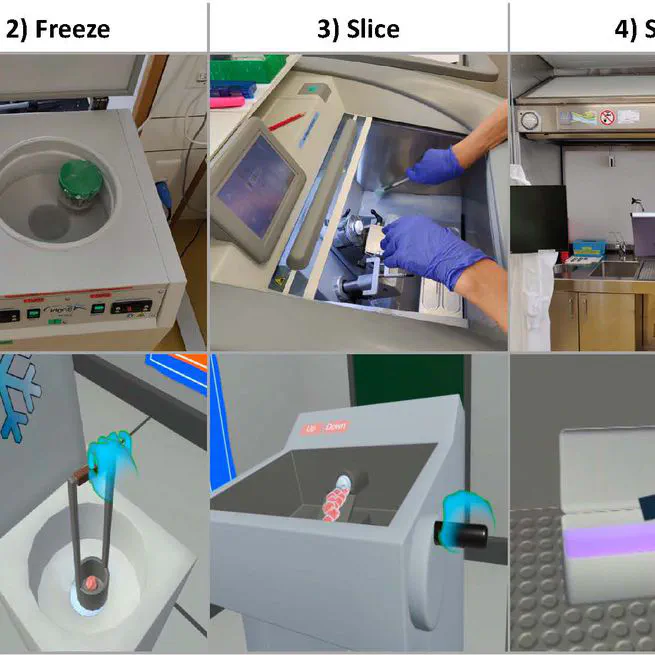
HistoLab VR: A User Elicitation Study Exploring the Potential of Virtual Reality Game-based Learning for Hazard Awareness
A user elicitation study exploring the potential of Virtual Reality game-based learning for hazard awareness in laboratory settings.
Oct 9, 2024
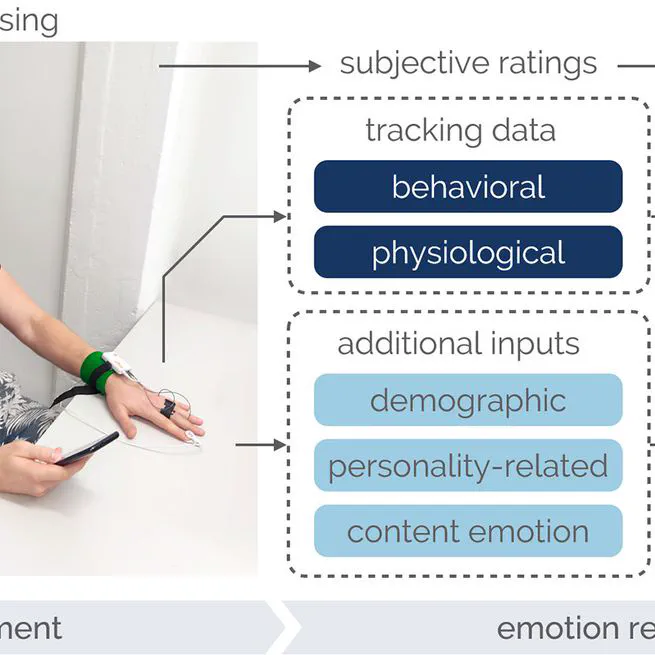
Detecting Users' Emotional States during Passive Social Media Use
A study detecting users' emotional states during passive social media use using physiological and behavioral signals.
May 15, 2024
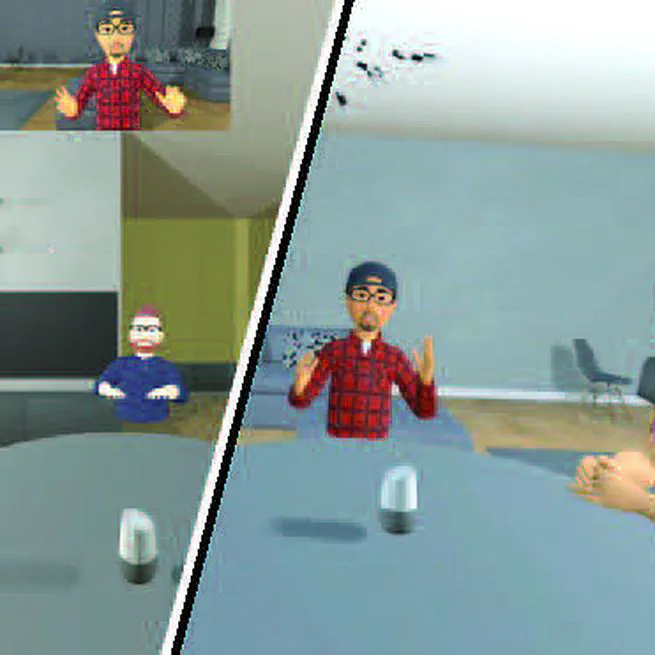
ViGather: Inclusive Virtual Conferencing with a Joint Experience Across Traditional Screen Devices and Mixed Reality Headsets
ViGather is an immersive teleconferencing system that integrates users of all platform types into a joint experience via equal representation and a first-person experience. ViGather renders all participants as embodied avatars in one shared scene to establish co-presence and elicit natural behavior during collocated conversations, including nonverbal communication cues such as eye contact between participants as well as body language such as turning one’s body to another person or using hand gestures to emphasize parts of a conversation during the virtual hangout.
Sep 13, 2023
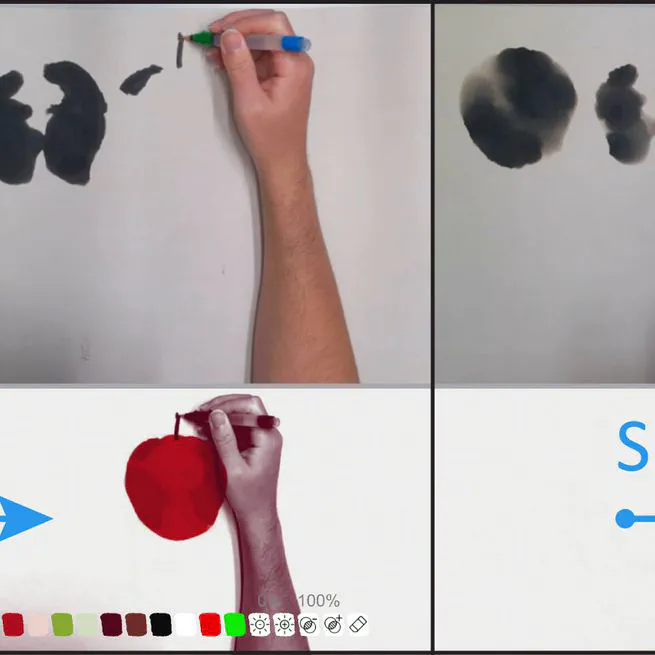
InfinitePaint: Painting in Virtual Reality with Passive Haptics Using Wet Brushes and a Physical Proxy Canvas
InfinitePaint is a system that supports digital painting in Virtual Reality on real paper with a real wet brush. We use special paper that turns black wherever it comes into contact with water and turns blank again upon drying. A single camera captures those temporary strokes and digitizes them while applying properties like color or other digital effects. We tested our system with artists and compared the subjective experience with a drawing tablet.
Apr 26, 2023
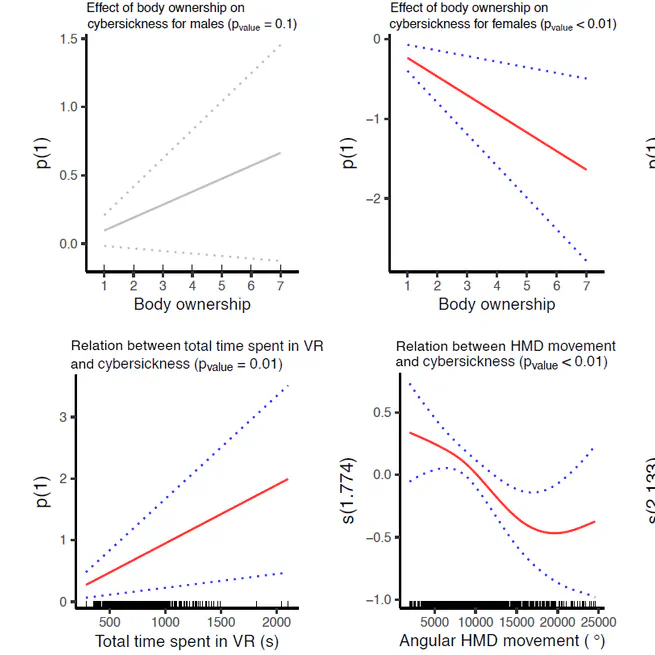
Demographic and Behavioral Correlates of Cybersickness: A Large Lab-in-the-Field Study of 837 Participants
Cybersickness has been one of the main impediments to the widespread adoption of Virtual Reality for decades. It has been argued that several factors can influence the occurrence of cybersickness, such as technical factors, interaction design, but also users’ demographics and their perceived presence. Yet, previous studies had comparably small sample sizes and demographically homogeneous samples; comparisons across studies (e.g., regarding demographic factors) are challenging due to the large variation in the studied virtual environments. In this paper, we address these limitations and report the results of a lab-in-the-field experiment on cybersickness with a large and heterogeneous sample of N=837 participants who navigated and interacted inside a virtual environment (ages 18–80, M=29.34, SD=9.50, 431 males, 400 females, 6 non-binaries).
Oct 20, 2022
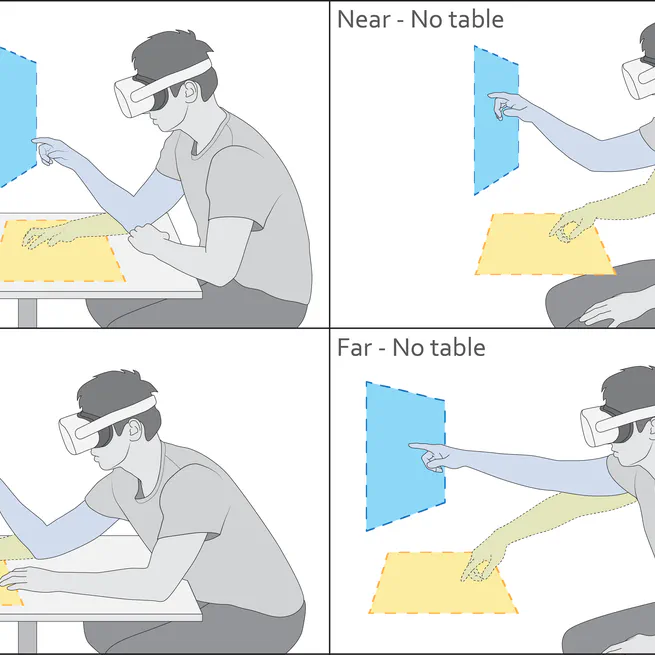
ComforTable User Interfaces: Surfaces Reduce Input Error, Time, and Exertion for Tabletop and Mid-air User Interfaces
Real-world work-spaces typically revolve around tables, which enable knowledge workers to comfortably perform tasks over an extended period of time during productivity tasks. Tables afford more ergonomic postures and provide opportunities for rest, which raises the question of whether they may also benefit prolonged interaction in Virtual Reality (VR). In this paper, we investigate the effects of tabletop surface presence in situated VR settings on task performance, behavior, and subjective experience. In an empirical study, 24 participants performed two tasks (selection, docking) on virtual interfaces placed at two distances and two orientations.
Oct 17, 2022
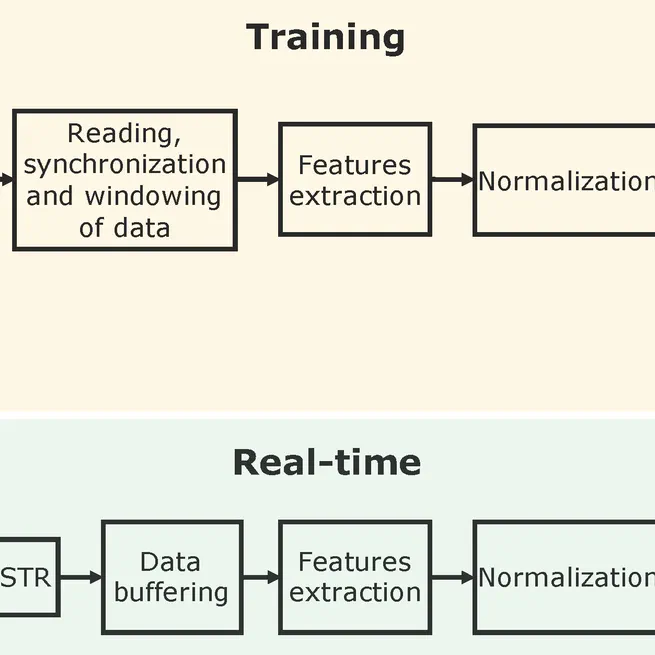
Towards Real-Time Recognition of Users’ Mental Workload Using Integrated Physiological Sensors Into a VR HMD
This paper describes an ``all-in-one'' solution for the real-time recognition of users' mental workloads in VR through the customization of a commercial HMD with physiological sensors. We conducted an extensive user study (N = 75) to collect mental workload data. The classification accuracy of 4 levels of mental workload using sensors embedded in the HMD is compared to the classification performance using commercial grade systems. In addition, we discuss the role of the signal normalization procedures and the contribution of the different physiological signals on the recognition accuracy.
Nov 6, 2020
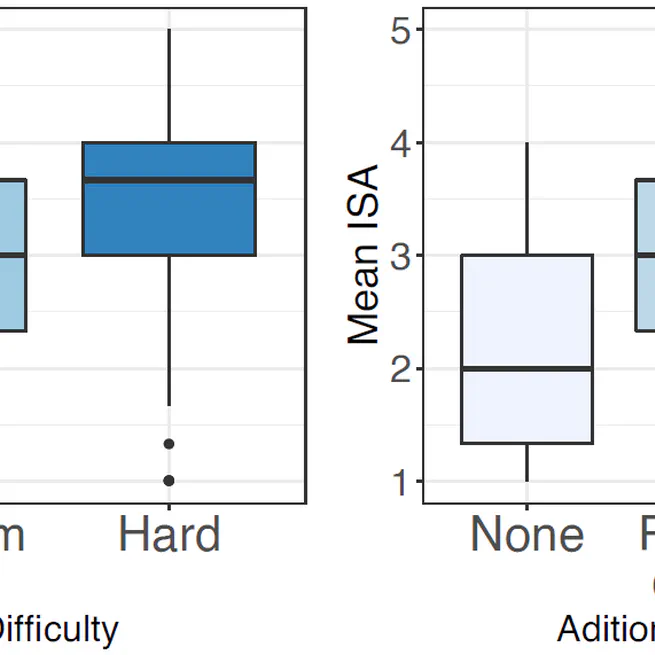
Introducing Mental Workload Assessment for the Design of Virtual Reality Training Scenarios
In this paper, we propose to consider Mental Workload (MWL) for the design of complex training scenarios involving multiple parallel tasks in VR. The proposed approach is based on the assessment of the MWL elicited by each potential task configuration in the training application. Following the assessment, the resulting model is then used to create training scenarios able to modulate the user’s MWL over time. This approach is illustrated by a VR flight training simulator based on the Multi-Attribute Task Battery II. Two user studies (Ntot = 52) confirmed that the approach was able to induce the expected mental workload over time.
Mar 6, 2020
3Dexterity: Finding Your Place in a 3-Armed World
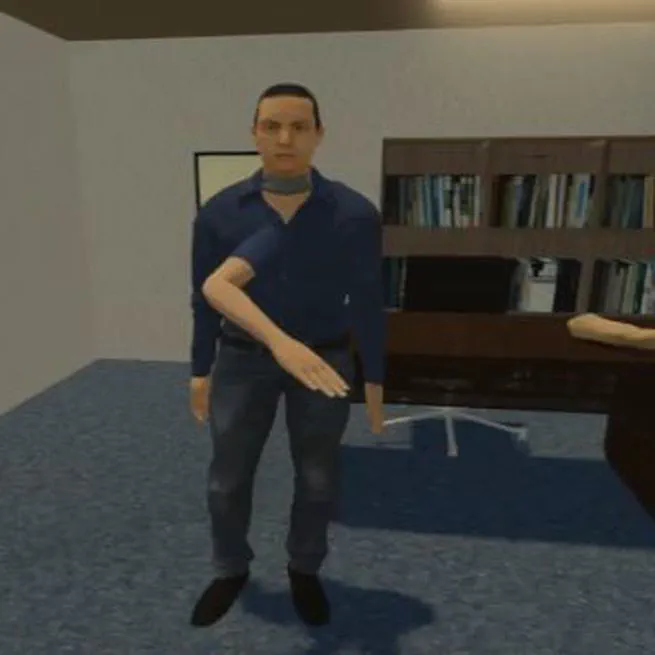
In the context of the IEEE VR 2020 3DUI Contest this paper presents a VR application to highlight the challenges that people with physical disabilities face on their daily life. Two-armed users are placed in a world where people normally have three arms, making them effectively physically disabled. The scenario takes the user through the process of struggling with everyday interactions (designed for humans with three arms), then receiving a third arm prosthesis and thus recovering some level of autonomy. The experience is intended to generate a sense of difference and empathy for physically disabled persons.
Mar 6, 2020
Studying the Mental Effort in Virtual Versus Real Environments
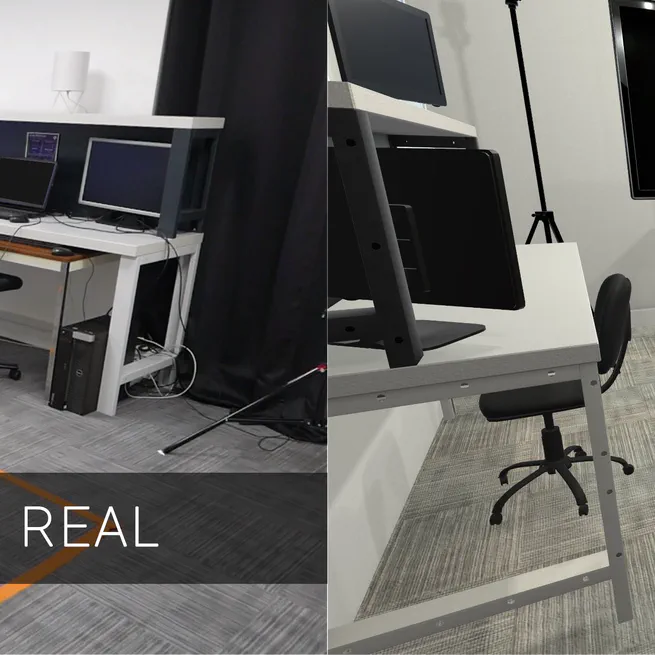
Is there an effect of Virtual Reality Head-Mounted Display on the user's mental effort? In this paper, we compare the mental effort in virtual versus in real environments. An experiment (N = 27) was conducted to assess the effect of being immersed in a virtual environment using an HMD on the user's mental effort while performing a standardized cognitive task (the well-known N-back task, with three levels of difficulty, N ∈ 1,2,3). We also explored the impact of performing a dual task (i.e., sitting versus walking) in both environments on mental effort.
Mar 6, 2019