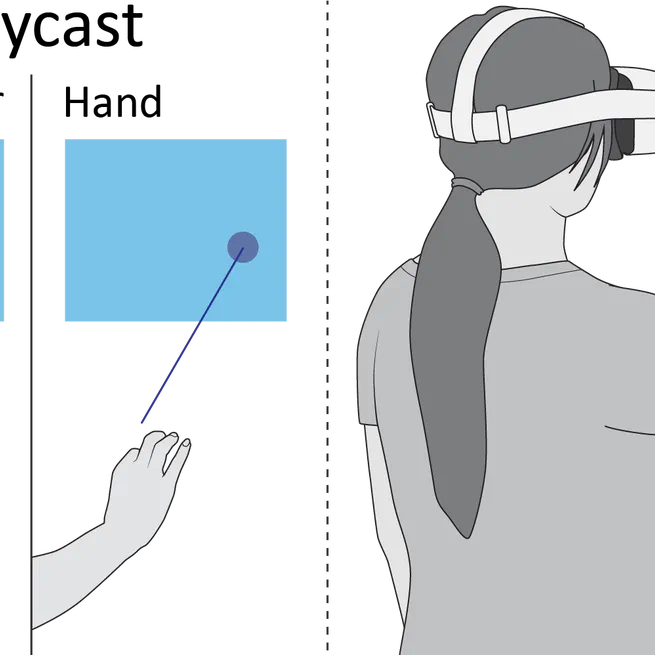
Controllers or Bare Hands? A Controlled Evaluation of Input Techniques on Interaction Performance and Exertion in Virtual Reality
In this paper, we study the impact of VR input modalities (controllers vs. free-hand) on physical exertion, agency, and task performance with two mid-air interaction techniques (touch, raycast) for selection and trajectory-tracing tasks. VR controllers led to reduced physical exertion, improved control, and enhanced speed and accuracy, especially in raycast settings. Regarding personal preference, participants chose VR controllers for raycast but free-hand interaction for mid-air touch. Physical exertion increased with selection speed, quantity of arm motion, variation in motion speed, and bad postures, following ergonomics metrics such as consumed endurance and rapid upper limb assessment. Physical exertion was also negatively correlated with agency and task accuracy.
Oct 9, 2023
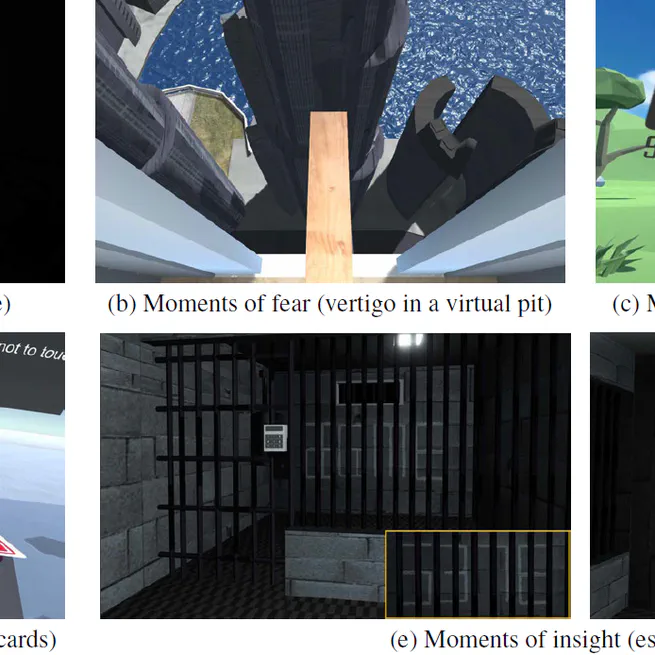
Characterizing Physiological Responses to Fear, Frustration, and Insight in Virtual Reality
Physiological sensing often complements studies of human behavior in virtual reality (VR) to detect users’ affective and cognitive states. Some psychological states, such as fear and frustration, can be particularly hard to differentiate from a physiological perspective as they are close in the arousal and valence emotional space. Moreover, it is largely unclear how users’ physiological reactions are expressed in response to transient psychological states such as fear, frustration, and insight—especially since these are rich indicators for characterizing users’ responses to dynamic systems but are hard to capture in highly interactive settings. We conducted a study (N=24) to analyze participants’ pulmonary, electrodermal, cardiac, and pupillary responses to moments of fear, frustration, and insight in immersive settings. Participants interacted in five VR environments, throughout which we measured their physiological reactions and analyzed the patterns. We also measured subjective fear and frustration using questionnaires.
Oct 24, 2022
Experiencing Herd Immunity in Virtual Reality Increases COVID‑19 Vaccination Intention
This study investigates the impact of an immersive virtual reality (VR) simulation of herd immunity on vaccination intentions and its potential underlying mechanisms. In this preregistered field study, N = 654 participants were randomly assigned to one of the three VR conditions: (1) Gamified Herd Immunity; (2) Gamified Herd Immunity + Empathy (with additional narrative elements); (3) Control (gamified with no vaccination-related content). In the Gamified Herd Immunity simulation, participants embodied a vulnerable person and navigated a wedding venue trying to avoid getting infected. A total of 455 participants with below maximum intentions to take a novel vaccine and without severe cybersickness were analyzed.
Sep 6, 2022
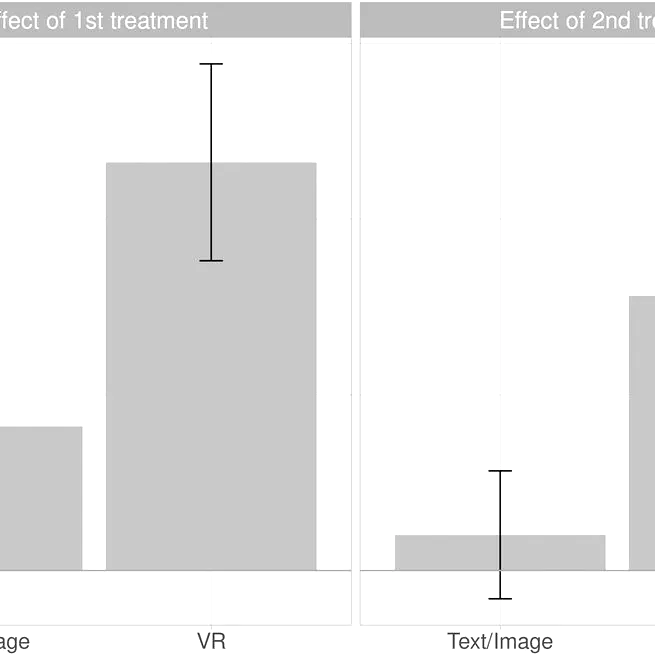
Virtual Reality Reduces COVID‑19 Vaccine Hesitancy in the Wild: A Randomized Trial
This research investigates the potential for engaging experiences in immersive virtual reality (VR) to strengthen participants’ understanding of community immunity, and therefore, their intention to get vaccinated. 222 participants were recruited in a public park. They were randomly assigned to experience the collective benefit of community immunity in a gamified immersive virtual reality environment or to receive the same information via text and images. Before and after the intervention, participants indicated their intention to take up a hypothetical vaccine for a new COVID-19 strain (0–100 scale) and belief in vaccination as a collective responsibility (1–7 scale).
Feb 6, 2022
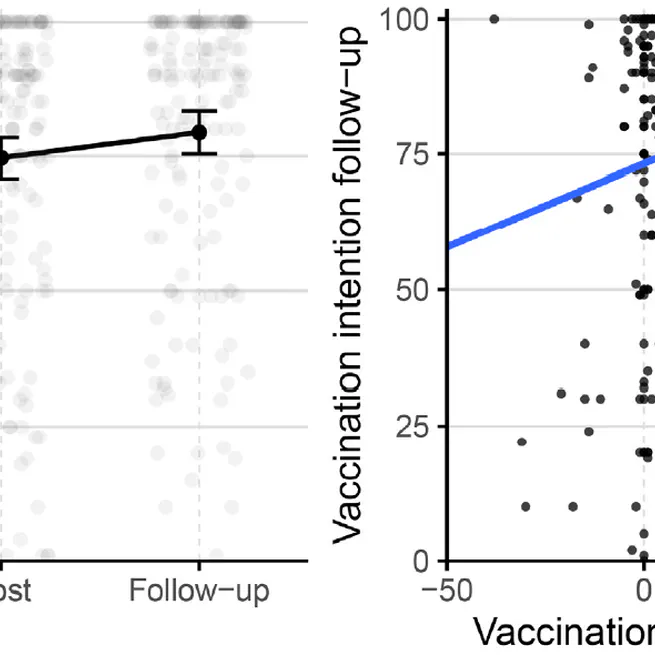
A Self-Administered Virtual Reality Intervention Increases COVID-19 Vaccination Intention
Effective interventions for increasing people’s intention to get vaccinated are crucial for global health, especially considering COVID-19. We devised a novel intervention using virtual reality (VR) consisting of a consultation with a general practitioner for communicating the benefits of COVID-19 vaccination and, in turn, increasing the intention to get vaccinated against COVID-19. 507 participants were randomly assigned across two age conditions (young or old self-body) and two communication conditions (with provision of personal benefit of vaccination only, or collective and personal benefit). The primary outcome was vaccination intention (score range 1–100) measured three times: immediately before and after the study, as well as one week later.
Nov 6, 2021
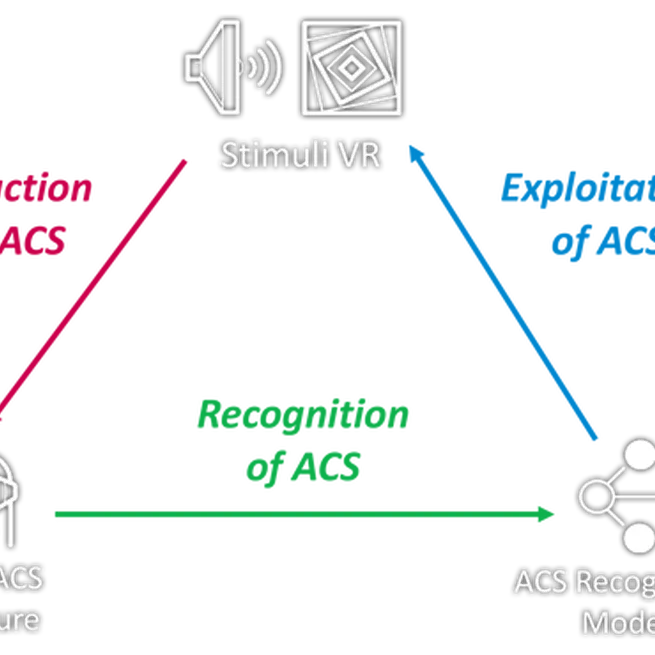
A Survey on Affective and Cognitive VR
In this paper, we introduce the term "Affective and Cognitive VR" and its main research lines. This survey also clarifies the different models of Affective and Cognitive States (ACS), presents the methods for measuring them with their respective advantages and drawbacks in VR, and showcases Affective and Cognitive VR studies done in an Immersive Virtual Environment (IVE) in a non-clinical context. We provide a comprehensive list of references with the analysis of 63 research articles and summarize future works directions.
Sep 6, 2021