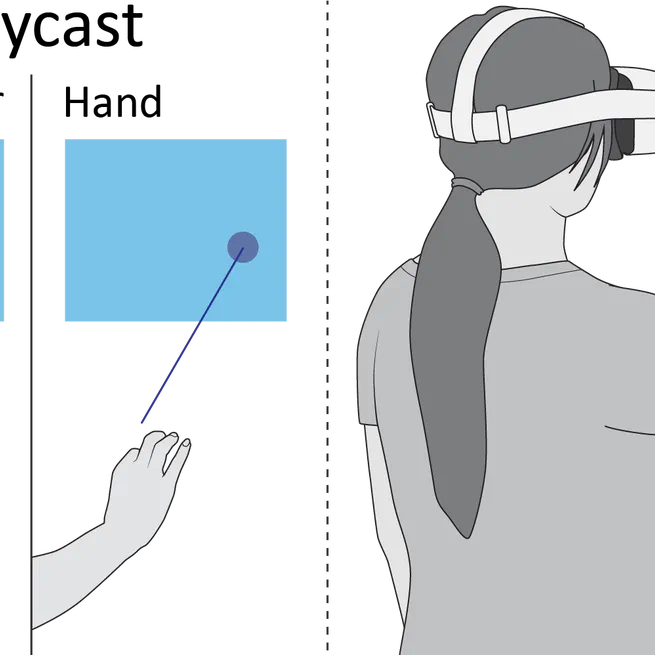
Controllers or Bare Hands? A Controlled Evaluation of Input Techniques on Interaction Performance and Exertion in Virtual Reality
In this paper, we study the impact of VR input modalities (controllers vs. free-hand) on physical exertion, agency, and task performance with two mid-air interaction techniques (touch, raycast) for selection and trajectory-tracing tasks. VR controllers led to reduced physical exertion, improved control, and enhanced speed and accuracy, especially in raycast settings. Regarding personal preference, participants chose VR controllers for raycast but free-hand interaction for mid-air touch. Physical exertion increased with selection speed, quantity of arm motion, variation in motion speed, and bad postures, following ergonomics metrics such as consumed endurance and rapid upper limb assessment. Physical exertion was also negatively correlated with agency and task accuracy.
Oct 9, 2023
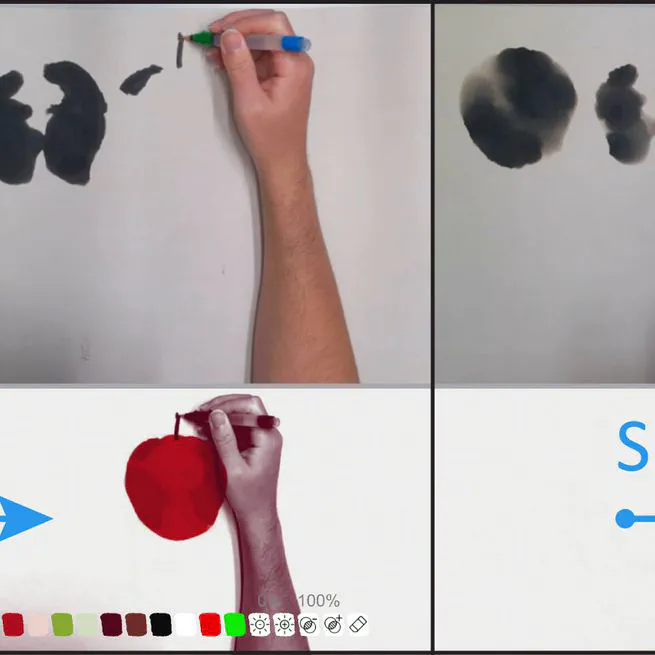
InfinitePaint: Painting in Virtual Reality with Passive Haptics Using Wet Brushes and a Physical Proxy Canvas
InfinitePaint is a system that supports digital painting in Virtual Reality on real paper with a real wet brush. We use special paper that turns black wherever it comes into contact with water and turns blank again upon drying. A single camera captures those temporary strokes and digitizes them while applying properties like color or other digital effects. We tested our system with artists and compared the subjective experience with a drawing tablet.
Apr 26, 2023

VR Grand Piano
[WIP] A personal project to play on a grand piano in an adaptive VR environment using a MIDI keyboard
Mar 3, 2023
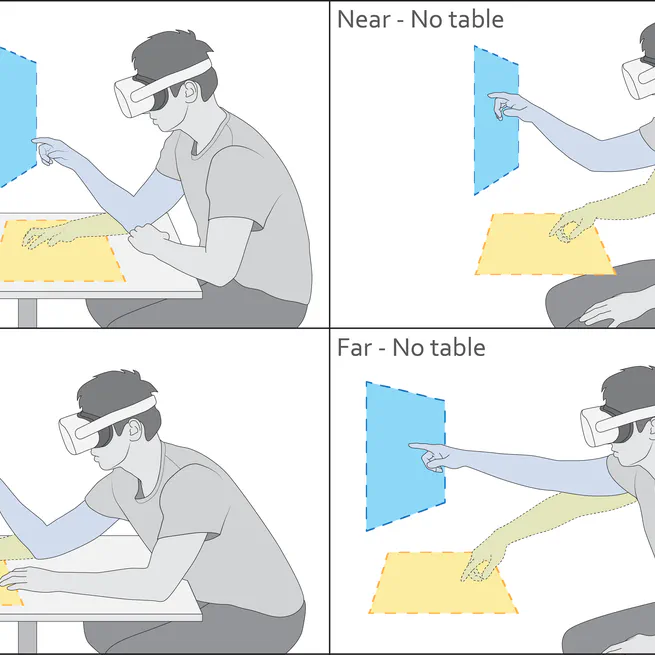
ComforTable User Interfaces: Surfaces Reduce Input Error, Time, and Exertion for Tabletop and Mid-air User Interfaces
Real-world work-spaces typically revolve around tables, which enable knowledge workers to comfortably perform tasks over an extended period of time during productivity tasks. Tables afford more ergonomic postures and provide opportunities for rest, which raises the question of whether they may also benefit prolonged interaction in Virtual Reality (VR). In this paper, we investigate the effects of tabletop surface presence in situated VR settings on task performance, behavior, and subjective experience. In an empirical study, 24 participants performed two tasks (selection, docking) on virtual interfaces placed at two distances and two orientations.
Oct 17, 2022
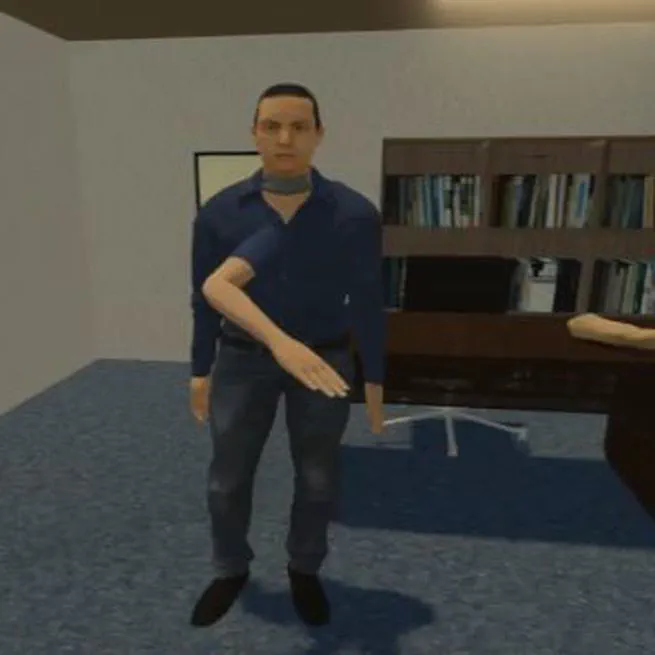
3Dexterity: Finding Your Place in a 3-Armed World
In the context of the IEEE VR 2020 3DUI Contest this paper presents a VR application to highlight the challenges that people with physical disabilities face on their daily life. Two-armed users are placed in a world where people normally have three arms, making them effectively physically disabled. The scenario takes the user through the process of struggling with everyday interactions (designed for humans with three arms), then receiving a third arm prosthesis and thus recovering some level of autonomy. The experience is intended to generate a sense of difference and empathy for physically disabled persons.
Mar 6, 2020
Pyramid Escape: Design of Novel Passive Haptics Interactions for an Immersive and Modular Scenario
In this paper, we present the design of ten different 3D user interactions using passive haptics and embedded in an escape game scenario in which users have to escape from a pyramid in a limited time. Our solution is innovative by its modularity, allowing interactions with virtual objects using tangible props manipulated either directly using the hands and feet or indirectly through a single prop held in the hand, in order to perform several interactions with the virtual environment. We also propose a navigation technique based on the “impossible spaces” design, allowing users to naturally walk through several overlapping rooms of the VE.
Mar 6, 2019
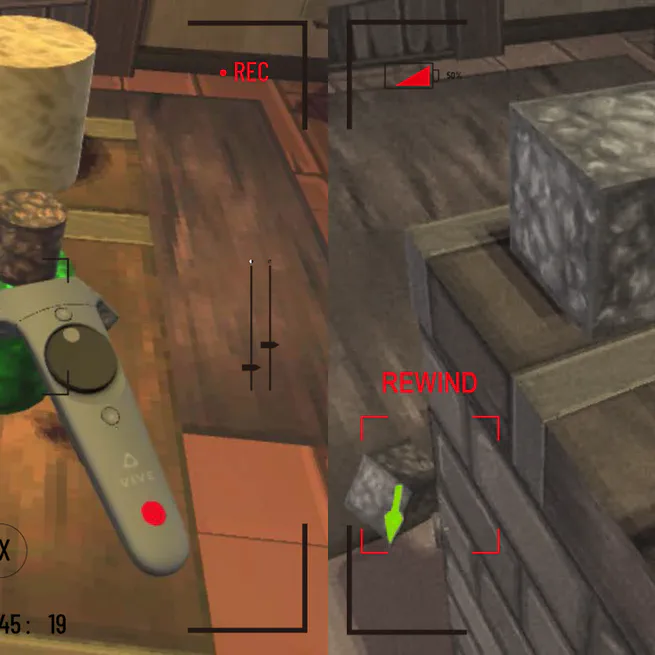
Toward Intuitive 3D User Interfaces for Climbing, Flying and Stacking
In this paper, we propose 3D user interfaces (3DUI) that are adapted to specific Virtual Reality (VR) tasks: climbing a ladder using a puppet metaphor, piloting a drone thanks to a 3D virtual compass and stacking 3D objects with physics-based manipulation and time control. These metaphors have been designed to provide the user with an intuitive, playful and efficient way to perform each task.
Mar 6, 2018
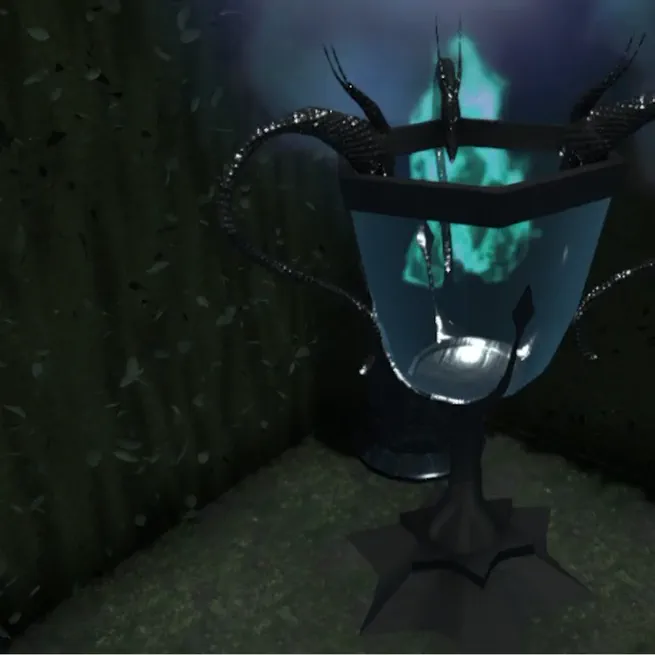
The Labyrinth of Harry Potter and the Goblet of Fire
An interactive VR app featuring impossible spaces navigation
May 5, 2017