Experiencing Herd Immunity in Virtual Reality Increases COVID‑19 Vaccination Intention
This study investigates the impact of an immersive virtual reality (VR) simulation of herd immunity on vaccination intentions and its potential underlying mechanisms. In this preregistered field study, N = 654 participants were randomly assigned to one of the three VR conditions: (1) Gamified Herd Immunity; (2) Gamified Herd Immunity + Empathy (with additional narrative elements); (3) Control (gamified with no vaccination-related content). In the Gamified Herd Immunity simulation, participants embodied a vulnerable person and navigated a wedding venue trying to avoid getting infected. A total of 455 participants with below maximum intentions to take a novel vaccine and without severe cybersickness were analyzed.
Sep 6, 2022
Virtual Reality Reduces COVID‑19 Vaccine Hesitancy in the Wild: A Randomized Trial
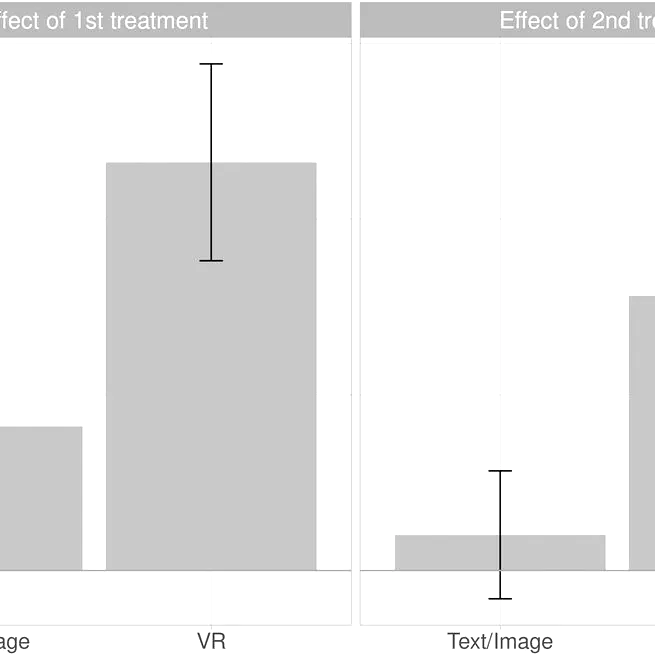
This research investigates the potential for engaging experiences in immersive virtual reality (VR) to strengthen participants’ understanding of community immunity, and therefore, their intention to get vaccinated. 222 participants were recruited in a public park. They were randomly assigned to experience the collective benefit of community immunity in a gamified immersive virtual reality environment or to receive the same information via text and images. Before and after the intervention, participants indicated their intention to take up a hypothetical vaccine for a new COVID-19 strain (0–100 scale) and belief in vaccination as a collective responsibility (1–7 scale).
Feb 6, 2022
A Self-Administered Virtual Reality Intervention Increases COVID-19 Vaccination Intention
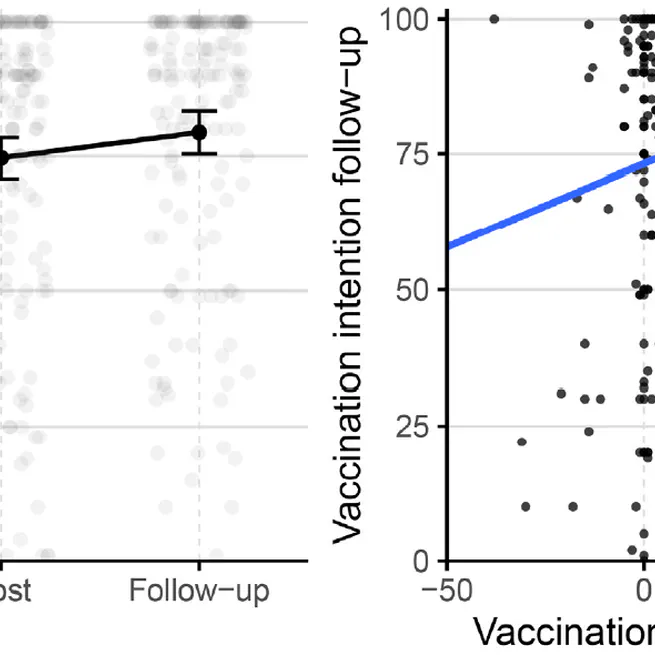
Effective interventions for increasing people’s intention to get vaccinated are crucial for global health, especially considering COVID-19. We devised a novel intervention using virtual reality (VR) consisting of a consultation with a general practitioner for communicating the benefits of COVID-19 vaccination and, in turn, increasing the intention to get vaccinated against COVID-19. 507 participants were randomly assigned across two age conditions (young or old self-body) and two communication conditions (with provision of personal benefit of vaccination only, or collective and personal benefit). The primary outcome was vaccination intention (score range 1–100) measured three times: immediately before and after the study, as well as one week later.
Nov 6, 2021