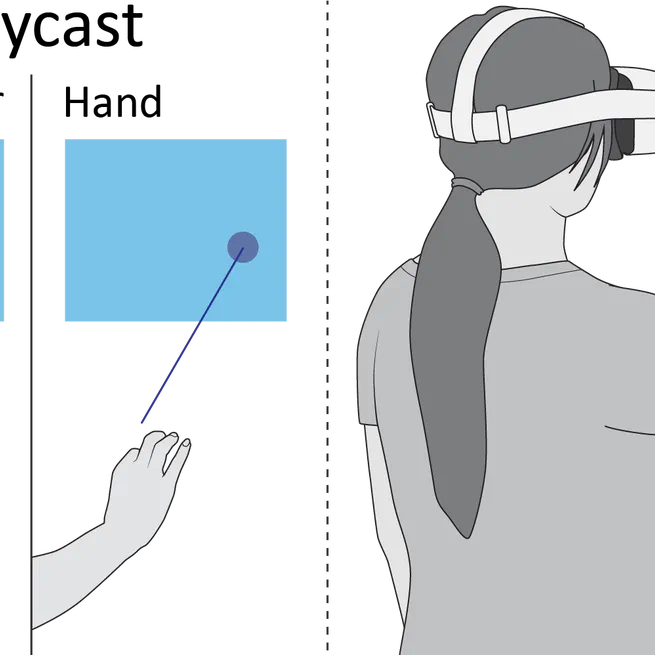
Controllers or Bare Hands? A Controlled Evaluation of Input Techniques on Interaction Performance and Exertion in Virtual Reality
In this paper, we study the impact of VR input modalities (controllers vs. free-hand) on physical exertion, agency, and task performance with two mid-air interaction techniques (touch, raycast) for selection and trajectory-tracing tasks. VR controllers led to reduced physical exertion, improved control, and enhanced speed and accuracy, especially in raycast settings. Regarding personal preference, participants chose VR controllers for raycast but free-hand interaction for mid-air touch. Physical exertion increased with selection speed, quantity of arm motion, variation in motion speed, and bad postures, following ergonomics metrics such as consumed endurance and rapid upper limb assessment. Physical exertion was also negatively correlated with agency and task accuracy.
Oct 9, 2023
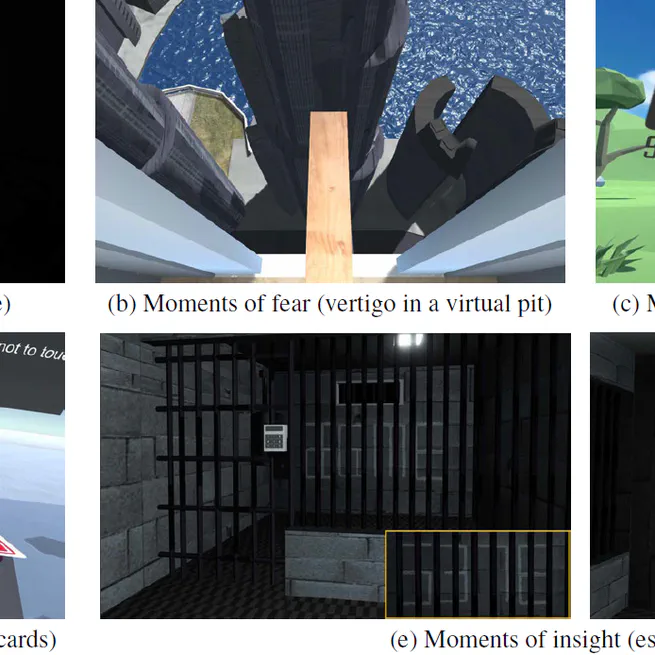
Characterizing Physiological Responses to Fear, Frustration, and Insight in Virtual Reality
Physiological sensing often complements studies of human behavior in virtual reality (VR) to detect users’ affective and cognitive states. Some psychological states, such as fear and frustration, can be particularly hard to differentiate from a physiological perspective as they are close in the arousal and valence emotional space. Moreover, it is largely unclear how users’ physiological reactions are expressed in response to transient psychological states such as fear, frustration, and insight—especially since these are rich indicators for characterizing users’ responses to dynamic systems but are hard to capture in highly interactive settings. We conducted a study (N=24) to analyze participants’ pulmonary, electrodermal, cardiac, and pupillary responses to moments of fear, frustration, and insight in immersive settings. Participants interacted in five VR environments, throughout which we measured their physiological reactions and analyzed the patterns. We also measured subjective fear and frustration using questionnaires.
Oct 24, 2022
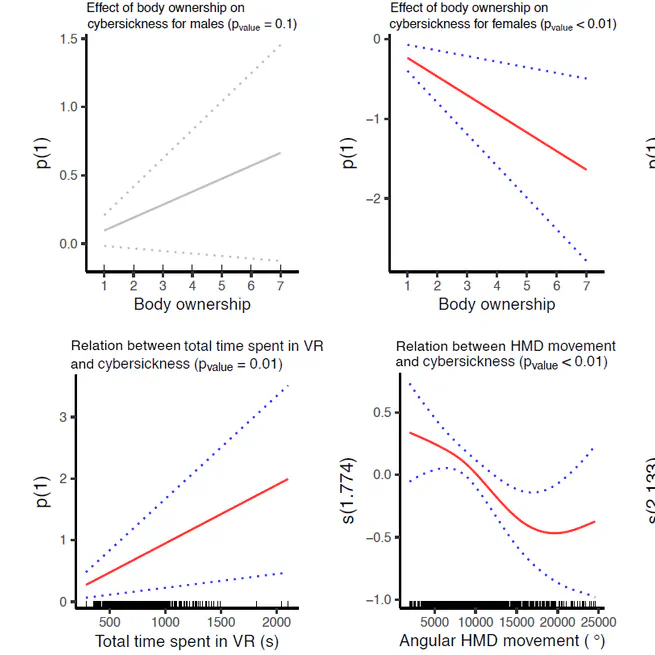
Demographic and Behavioral Correlates of Cybersickness: A Large Lab-in-the-Field Study of 837 Participants
Cybersickness has been one of the main impediments to the widespread adoption of Virtual Reality for decades. It has been argued that several factors can influence the occurrence of cybersickness, such as technical factors, interaction design, but also users’ demographics and their perceived presence. Yet, previous studies had comparably small sample sizes and demographically homogeneous samples; comparisons across studies (e.g., regarding demographic factors) are challenging due to the large variation in the studied virtual environments. In this paper, we address these limitations and report the results of a lab-in-the-field experiment on cybersickness with a large and heterogeneous sample of N=837 participants who navigated and interacted inside a virtual environment (ages 18–80, M=29.34, SD=9.50, 431 males, 400 females, 6 non-binaries).
Oct 20, 2022
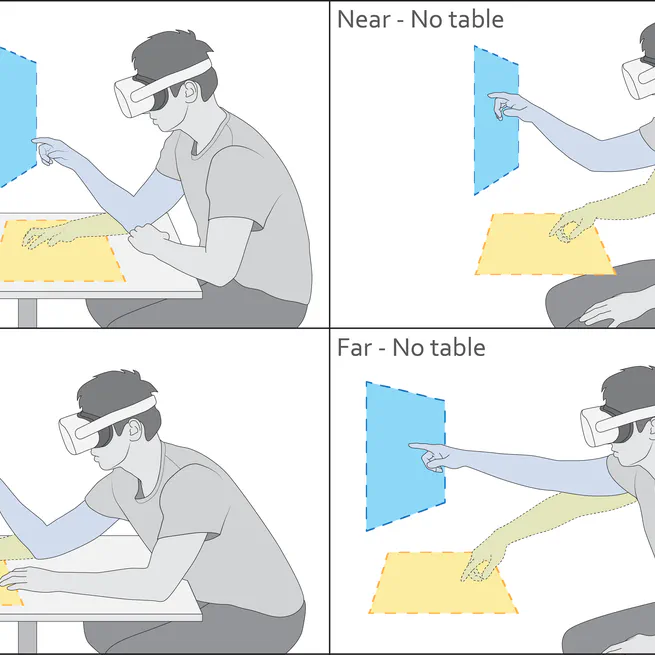
ComforTable User Interfaces: Surfaces Reduce Input Error, Time, and Exertion for Tabletop and Mid-air User Interfaces
Real-world work-spaces typically revolve around tables, which enable knowledge workers to comfortably perform tasks over an extended period of time during productivity tasks. Tables afford more ergonomic postures and provide opportunities for rest, which raises the question of whether they may also benefit prolonged interaction in Virtual Reality (VR). In this paper, we investigate the effects of tabletop surface presence in situated VR settings on task performance, behavior, and subjective experience. In an empirical study, 24 participants performed two tasks (selection, docking) on virtual interfaces placed at two distances and two orientations.
Oct 17, 2022
Experiencing Herd Immunity in Virtual Reality Increases COVID‑19 Vaccination Intention
This study investigates the impact of an immersive virtual reality (VR) simulation of herd immunity on vaccination intentions and its potential underlying mechanisms. In this preregistered field study, N = 654 participants were randomly assigned to one of the three VR conditions: (1) Gamified Herd Immunity; (2) Gamified Herd Immunity + Empathy (with additional narrative elements); (3) Control (gamified with no vaccination-related content). In the Gamified Herd Immunity simulation, participants embodied a vulnerable person and navigated a wedding venue trying to avoid getting infected. A total of 455 participants with below maximum intentions to take a novel vaccine and without severe cybersickness were analyzed.
Sep 6, 2022
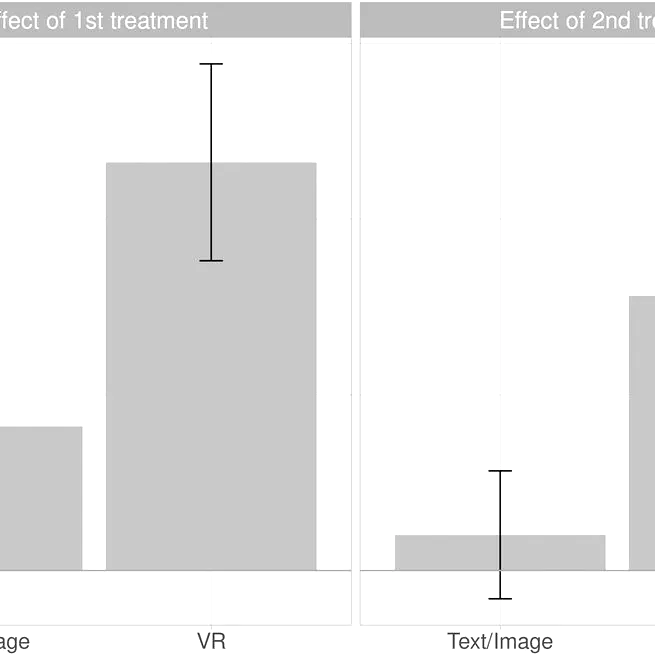
Virtual Reality Reduces COVID‑19 Vaccine Hesitancy in the Wild: A Randomized Trial
This research investigates the potential for engaging experiences in immersive virtual reality (VR) to strengthen participants’ understanding of community immunity, and therefore, their intention to get vaccinated. 222 participants were recruited in a public park. They were randomly assigned to experience the collective benefit of community immunity in a gamified immersive virtual reality environment or to receive the same information via text and images. Before and after the intervention, participants indicated their intention to take up a hypothetical vaccine for a new COVID-19 strain (0–100 scale) and belief in vaccination as a collective responsibility (1–7 scale).
Feb 6, 2022
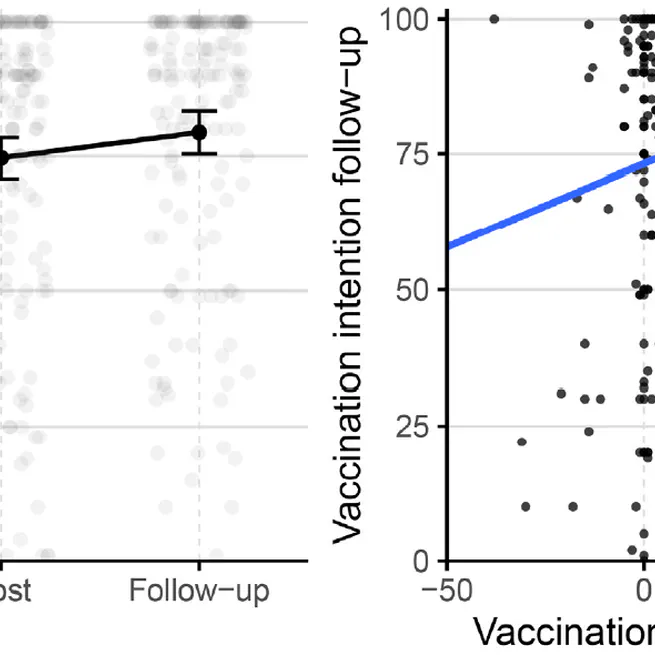
A Self-Administered Virtual Reality Intervention Increases COVID-19 Vaccination Intention
Effective interventions for increasing people’s intention to get vaccinated are crucial for global health, especially considering COVID-19. We devised a novel intervention using virtual reality (VR) consisting of a consultation with a general practitioner for communicating the benefits of COVID-19 vaccination and, in turn, increasing the intention to get vaccinated against COVID-19. 507 participants were randomly assigned across two age conditions (young or old self-body) and two communication conditions (with provision of personal benefit of vaccination only, or collective and personal benefit). The primary outcome was vaccination intention (score range 1–100) measured three times: immediately before and after the study, as well as one week later.
Nov 6, 2021
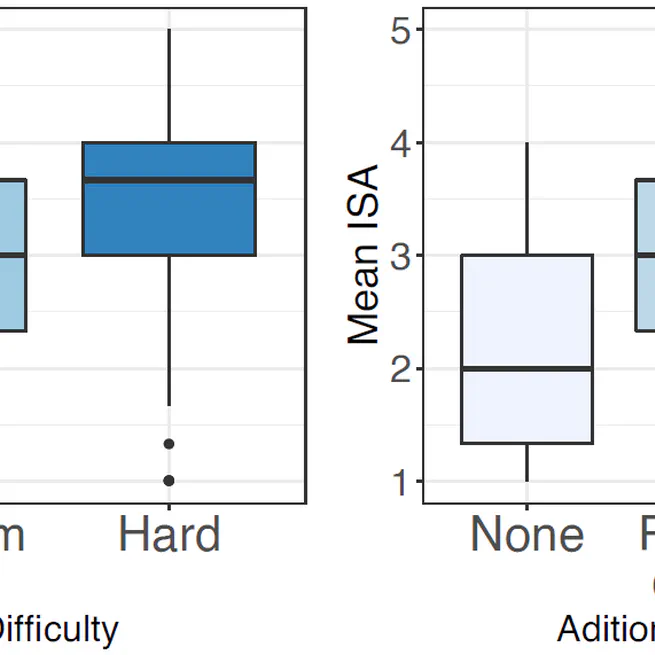
Introducing Mental Workload Assessment for the Design of Virtual Reality Training Scenarios
In this paper, we propose to consider Mental Workload (MWL) for the design of complex training scenarios involving multiple parallel tasks in VR. The proposed approach is based on the assessment of the MWL elicited by each potential task configuration in the training application. Following the assessment, the resulting model is then used to create training scenarios able to modulate the user’s MWL over time. This approach is illustrated by a VR flight training simulator based on the Multi-Attribute Task Battery II. Two user studies (Ntot = 52) confirmed that the approach was able to induce the expected mental workload over time.
Mar 6, 2020
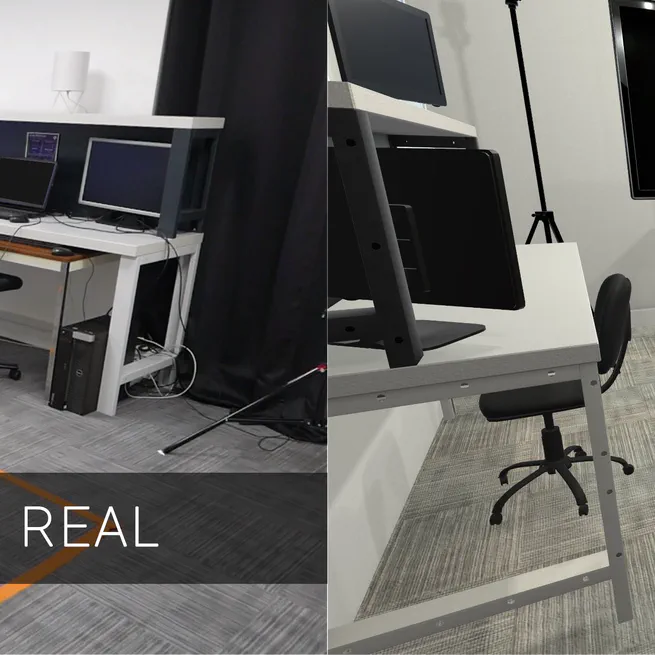
Studying the Mental Effort in Virtual Versus Real Environments
Is there an effect of Virtual Reality Head-Mounted Display on the user's mental effort? In this paper, we compare the mental effort in virtual versus in real environments. An experiment (N = 27) was conducted to assess the effect of being immersed in a virtual environment using an HMD on the user's mental effort while performing a standardized cognitive task (the well-known N-back task, with three levels of difficulty, N ∈ 1,2,3). We also explored the impact of performing a dual task (i.e., sitting versus walking) in both environments on mental effort.
Mar 6, 2019