Demographic and Behavioral Correlates of Cybersickness: A Large Lab-in-the-Field Study of 837 Participants
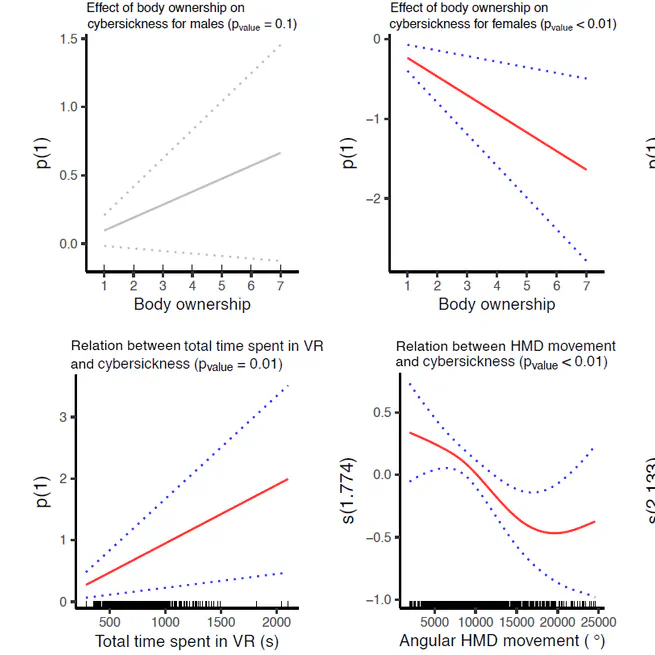
Cybersickness has been one of the main impediments to the widespread adoption of Virtual Reality for decades. It has been argued that several factors can influence the occurrence of cybersickness, such as technical factors, interaction design, but also users’ demographics and their perceived presence. Yet, previous studies had comparably small sample sizes and demographically homogeneous samples; comparisons across studies (e.g., regarding demographic factors) are challenging due to the large variation in the studied virtual environments. In this paper, we address these limitations and report the results of a lab-in-the-field experiment on cybersickness with a large and heterogeneous sample of N=837 participants who navigated and interacted inside a virtual environment (ages 18–80, M=29.34, SD=9.50, 431 males, 400 females, 6 non-binaries).
Oct 20, 2022
A Self-Administered Virtual Reality Intervention Increases COVID-19 Vaccination Intention
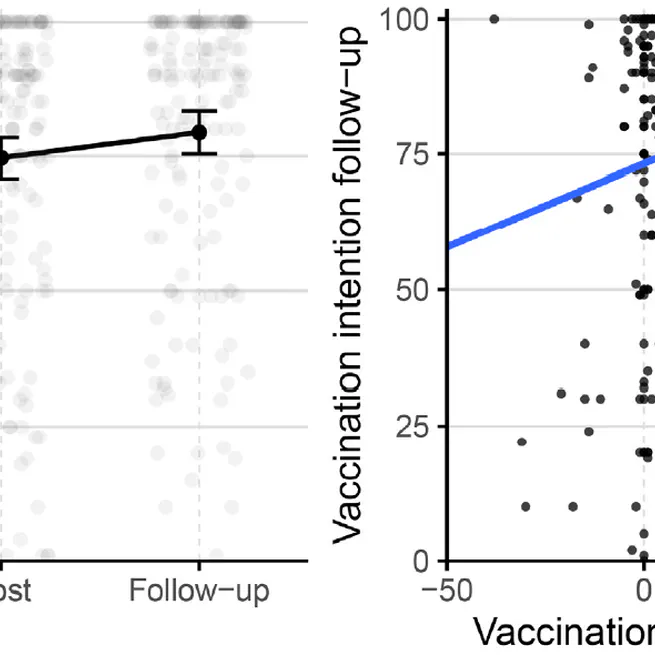
Effective interventions for increasing people’s intention to get vaccinated are crucial for global health, especially considering COVID-19. We devised a novel intervention using virtual reality (VR) consisting of a consultation with a general practitioner for communicating the benefits of COVID-19 vaccination and, in turn, increasing the intention to get vaccinated against COVID-19. 507 participants were randomly assigned across two age conditions (young or old self-body) and two communication conditions (with provision of personal benefit of vaccination only, or collective and personal benefit). The primary outcome was vaccination intention (score range 1–100) measured three times: immediately before and after the study, as well as one week later.
Nov 6, 2021
Towards Real-Time Recognition of Users’ Mental Workload Using Integrated Physiological Sensors Into a VR HMD
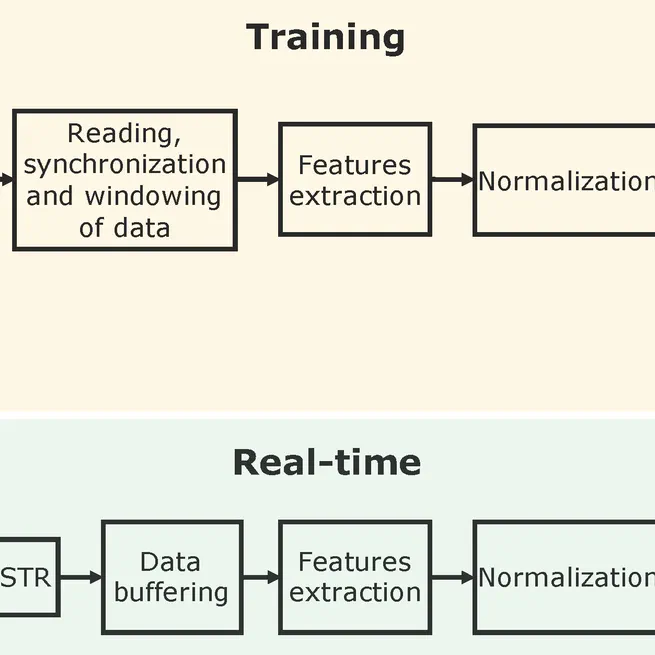
This paper describes an ``all-in-one'' solution for the real-time recognition of users' mental workloads in VR through the customization of a commercial HMD with physiological sensors. We conducted an extensive user study (N = 75) to collect mental workload data. The classification accuracy of 4 levels of mental workload using sensors embedded in the HMD is compared to the classification performance using commercial grade systems. In addition, we discuss the role of the signal normalization procedures and the contribution of the different physiological signals on the recognition accuracy.
Nov 6, 2020
Introducing Mental Workload Assessment for the Design of Virtual Reality Training Scenarios
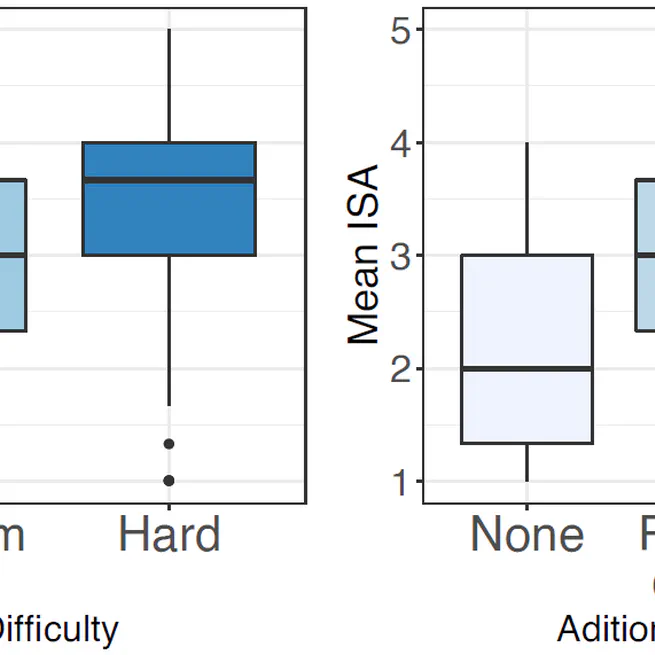
In this paper, we propose to consider Mental Workload (MWL) for the design of complex training scenarios involving multiple parallel tasks in VR. The proposed approach is based on the assessment of the MWL elicited by each potential task configuration in the training application. Following the assessment, the resulting model is then used to create training scenarios able to modulate the user’s MWL over time. This approach is illustrated by a VR flight training simulator based on the Multi-Attribute Task Battery II. Two user studies (Ntot = 52) confirmed that the approach was able to induce the expected mental workload over time.
Mar 6, 2020