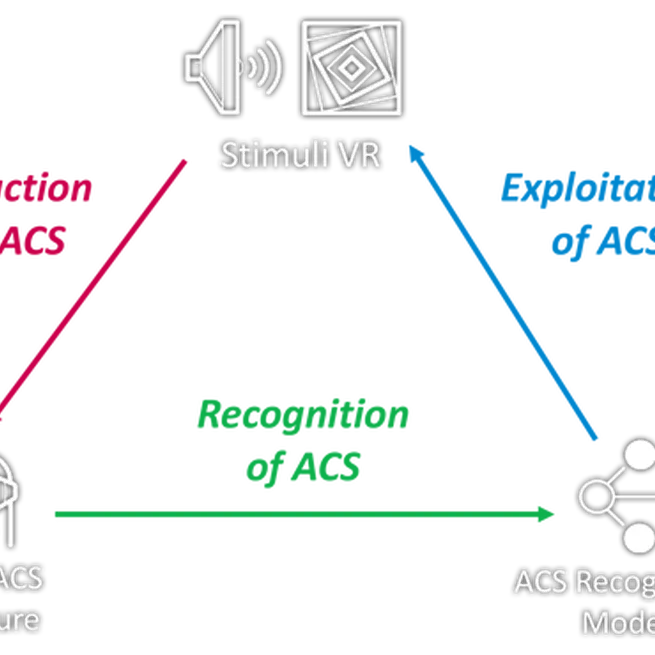
A Survey on Affective and Cognitive VR
In this paper, we introduce the term "Affective and Cognitive VR" and its main research lines. This survey also clarifies the different models of Affective and Cognitive States (ACS), presents the methods for measuring them with their respective advantages and drawbacks in VR, and showcases Affective and Cognitive VR studies done in an Immersive Virtual Environment (IVE) in a non-clinical context. We provide a comprehensive list of references with the analysis of 63 research articles and summarize future works directions.
Sep 6, 2021
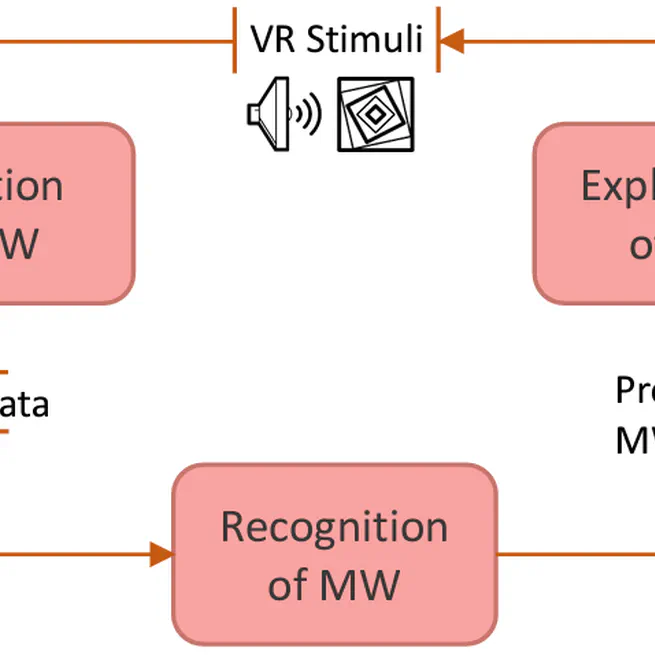
Towards the Exploitation of Mental Workload in Virtual Reality Systems
My PhD thesis aims to contribute to the development of adaptive VR systems based on the users' mental workload. We investigate 3 research axes: induction, recognition, and exploitation of mental workload in VR. In addition, we propose a definition of “Affective and Cognitive Virtual Reality”.
Jan 14, 2021
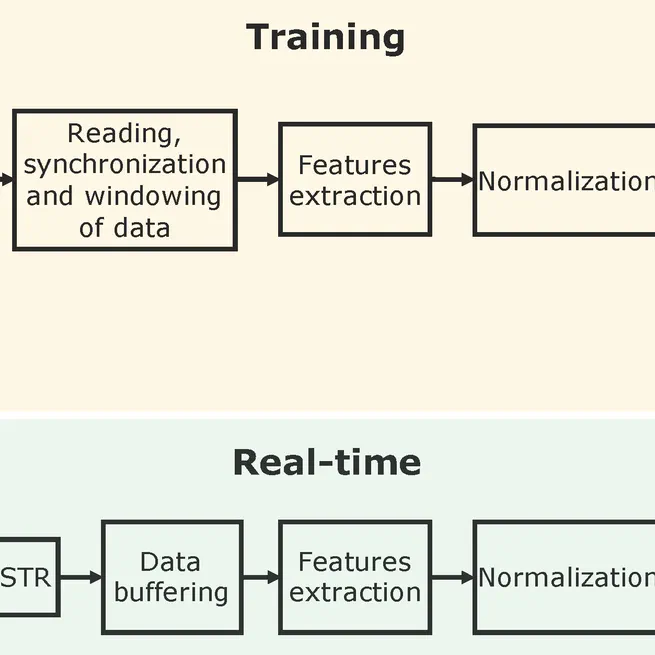
Towards Real-Time Recognition of Users’ Mental Workload Using Integrated Physiological Sensors Into a VR HMD
This paper describes an ``all-in-one'' solution for the real-time recognition of users' mental workloads in VR through the customization of a commercial HMD with physiological sensors. We conducted an extensive user study (N = 75) to collect mental workload data. The classification accuracy of 4 levels of mental workload using sensors embedded in the HMD is compared to the classification performance using commercial grade systems. In addition, we discuss the role of the signal normalization procedures and the contribution of the different physiological signals on the recognition accuracy.
Nov 6, 2020
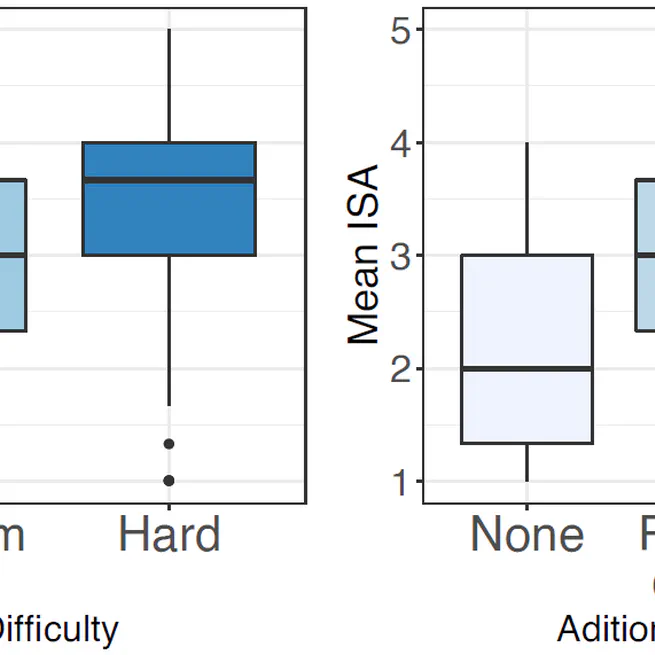
Introducing Mental Workload Assessment for the Design of Virtual Reality Training Scenarios
In this paper, we propose to consider Mental Workload (MWL) for the design of complex training scenarios involving multiple parallel tasks in VR. The proposed approach is based on the assessment of the MWL elicited by each potential task configuration in the training application. Following the assessment, the resulting model is then used to create training scenarios able to modulate the user’s MWL over time. This approach is illustrated by a VR flight training simulator based on the Multi-Attribute Task Battery II. Two user studies (Ntot = 52) confirmed that the approach was able to induce the expected mental workload over time.
Mar 6, 2020
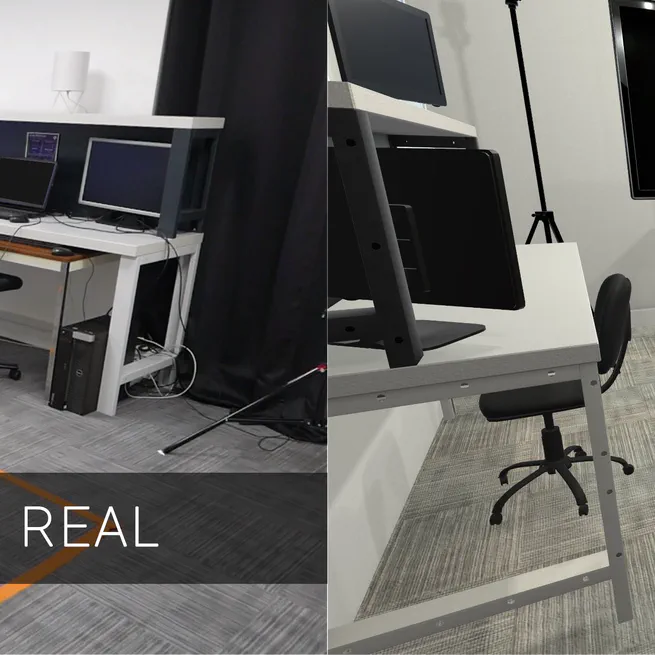
Studying the Mental Effort in Virtual Versus Real Environments
Is there an effect of Virtual Reality Head-Mounted Display on the user's mental effort? In this paper, we compare the mental effort in virtual versus in real environments. An experiment (N = 27) was conducted to assess the effect of being immersed in a virtual environment using an HMD on the user's mental effort while performing a standardized cognitive task (the well-known N-back task, with three levels of difficulty, N ∈ 1,2,3). We also explored the impact of performing a dual task (i.e., sitting versus walking) in both environments on mental effort.
Mar 6, 2019