ViGather: Inclusive Virtual Conferencing with a Joint Experience Across Traditional Screen Devices and Mixed Reality Headsets
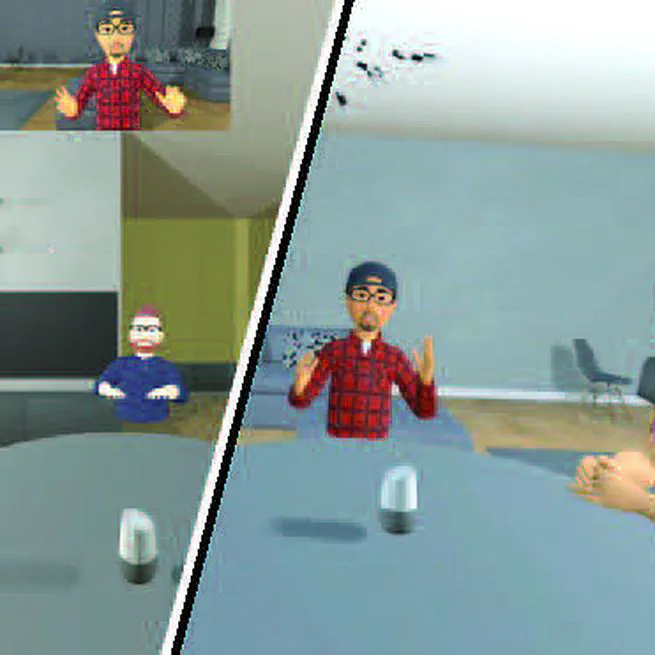
ViGather is an immersive teleconferencing system that integrates users of all platform types into a joint experience via equal representation and a first-person experience. ViGather renders all participants as embodied avatars in one shared scene to establish co-presence and elicit natural behavior during collocated conversations, including nonverbal communication cues such as eye contact between participants as well as body language such as turning one’s body to another person or using hand gestures to emphasize parts of a conversation during the virtual hangout.
Sep 13, 2023
Demographic and Behavioral Correlates of Cybersickness: A Large Lab-in-the-Field Study of 837 Participants
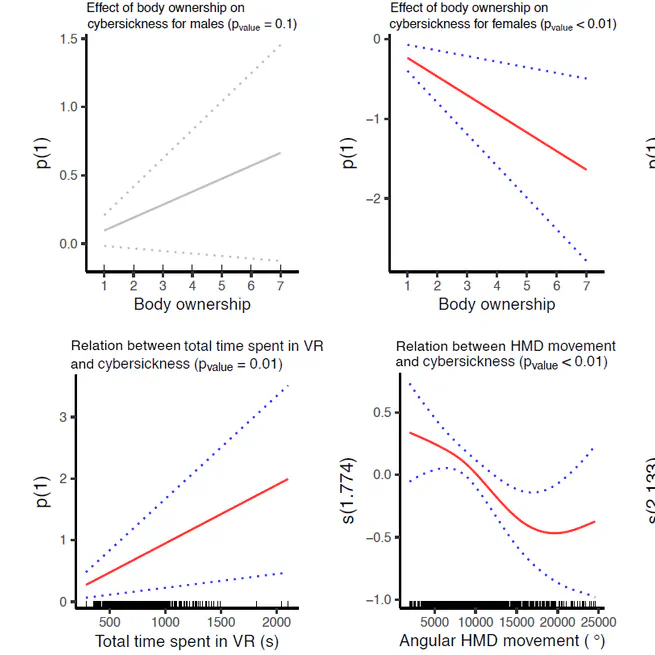
Cybersickness has been one of the main impediments to the widespread adoption of Virtual Reality for decades. It has been argued that several factors can influence the occurrence of cybersickness, such as technical factors, interaction design, but also users’ demographics and their perceived presence. Yet, previous studies had comparably small sample sizes and demographically homogeneous samples; comparisons across studies (e.g., regarding demographic factors) are challenging due to the large variation in the studied virtual environments. In this paper, we address these limitations and report the results of a lab-in-the-field experiment on cybersickness with a large and heterogeneous sample of N=837 participants who navigated and interacted inside a virtual environment (ages 18–80, M=29.34, SD=9.50, 431 males, 400 females, 6 non-binaries).
Oct 20, 2022
A Survey on Affective and Cognitive VR
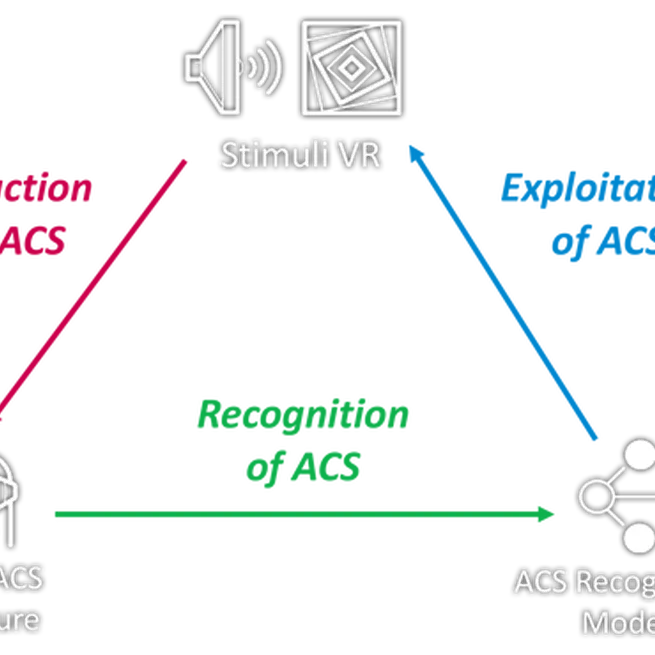
In this paper, we introduce the term "Affective and Cognitive VR" and its main research lines. This survey also clarifies the different models of Affective and Cognitive States (ACS), presents the methods for measuring them with their respective advantages and drawbacks in VR, and showcases Affective and Cognitive VR studies done in an Immersive Virtual Environment (IVE) in a non-clinical context. We provide a comprehensive list of references with the analysis of 63 research articles and summarize future works directions.
Sep 6, 2021